


Blog / Acton Chevrolet Dealer

Professional Collision Repair and Body Shop Services in Middlesex County

Professional Collision Repair and Body Shop Services in Middlesex County

An unexpected vehicle accident disrupts your daily routine and introduces a complex series of decisions regarding structural integrity, safety standards, and insurance logistics. Navigating the aftermath of a collision requires professional guidance to ensure your vehicle is returned to its precise factory specifications. When a vehicle sustains impact damage, the structural, mechanical, and cosmetic systems must be evaluated as an interconnected whole rather than isolated components.

The collision recovery process begins with a comprehensive, multi-point assessment. Technicians document the visible external damage while performing diagnostic pre-scans to identify hidden electrical faults, safety-system codes, and structural shifts. Under Massachusetts law, a written appraisal of motor vehicle damage is strictly required before any collision repair work can commence. This appraisal must contain a highly detailed, itemized breakdown of the necessary replacement parts, labor hours, and the exact repair procedures required to restore the vehicle safely.

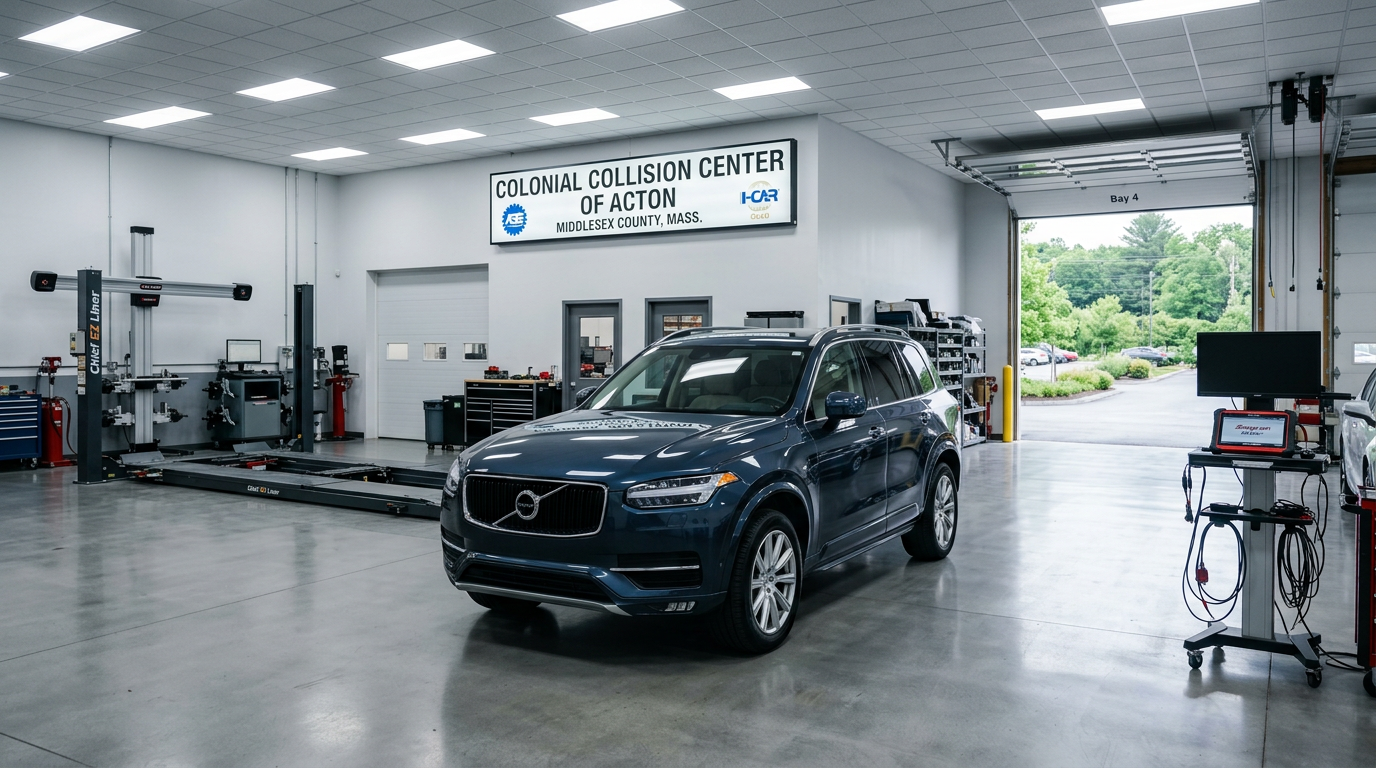
At Colonial Collision Center of Acton, we coordinate directly with insurance providers to streamline the transition from the initial appraisal to the final physical repairs. Our specialized facility is equipped with advanced diagnostic tools, heavy-duty frame-pulling machinery, and factory-approved refinishing systems to manage every stage of your vehicle's recovery. If your vehicle requires immediate mechanical attention, structural assessment, or routine maintenance following an incident, you can easily schedule service with our factory-trained technicians.

To help local drivers manage the unexpected costs associated with post-accident recovery, we routinely update our available service and parts specials. Our team utilizes original manufacturer components to preserve the exact safety, durability, and crash-performance standards engineered into your vehicle. If you or an independent repair technician need to secure specific factory components, you can order parts directly through our dedicated parts department. For personalized assistance or to discuss your vehicle's specific repair plan, please contact our service team by giving us a quick call today.

Table of Contents

Comprehensive Care for Minor Body Damage and Major Structural Collision Repair

Does a professional collision center handle both minor body damage and major structural repairs? A fully equipped facility must be capable of managing the entire spectrum of auto body restoration, as seemingly superficial surface damage often masks deeper structural compromises.

Minor body damage typically involves cosmetic imperfections that do not affect the underlying safety or structural performance of the vehicle. These common repairs include:

  • Paintless dent repair for minor door dings and hail damage
  • Surface scratch removal and precision paint blending
  • Bumper cover reconditioning or replacement
  • Cosmetic alloy wheel refinishing
  • Replacement of cracked glass, side mirrors, and exterior trim panels

Major collision repair, by contrast, addresses the structural integrity of the vehicle's frame or unibody construction. During a severe impact, a vehicle's crumple zones are engineered to deform and absorb kinetic energy, protecting the passenger cabin. Restoring these structures requires heavy-duty frame racks and computerized three-dimensional measuring systems. Technicians utilize laser-guided coordinates to compare the vehicle's real-time physical dimensions against original factory specifications, pulling the frame back to its exact structural tolerances.

Verifying structural alignment accuracy is critical before any cosmetic panels are reinstalled. For full-frame vehicles, such as trucks and larger SUVs, specific frame sections can occasionally be isolated, straightened, or replaced. Unibody vehicles, which integrate the body and frame into a single load-bearing structure, require specialized welding and pulling techniques to ensure the high-strength steel behaves correctly in any future impacts.

Navigating the Insurance Claims Process and Deductibles

Who is responsible for paying the deductible for a collision repair? The policyholder is legally responsible for paying the designated insurance deductible directly to the collision repair facility once all authorized repairs are completed and the vehicle is ready for pickup. The deductible represents the out-of-pocket portion of the insurance policy that the driver agreed to pay when establishing their coverage.

The insurance claims process in Massachusetts follows a structured path designed to protect the consumer while ensuring vehicle safety:

  1. Initial Claim Filing: The policyholder reports the incident to their insurance provider to initiate the claim and obtain a claim number.
  2. The Written Appraisal: A licensed appraiser inspects the vehicle and generates a detailed, itemized appraisal of the visible damage.
  3. Teardown and Disassembly: The repair facility partially disassembles the damaged areas to inspect for hidden structural, mechanical, or electrical issues.
  4. Supplemental Estimates: If hidden damage is discovered during teardown, the shop submits a supplemental estimate to the insurance company for approval before proceeding with those additional repairs.
  5. Repair and Refinishing: Technicians complete the structural, mechanical, and paint work according to manufacturer guidelines.
  6. Deductible Payment and Vehicle Release: The customer pays the deductible to the shop, the insurer pays the remaining balance, and the vehicle is released.

Many drivers wonder if insurance companies are allowed to recommend specific body shops in Massachusetts. While insurance providers are legally permitted to suggest a list of preferred or referral repair facilities, they must explicitly inform you that you are under no obligation to use them. Under state law, you retain the absolute right to choose any licensed collision repair facility to perform your vehicle's body and structural work. Selecting a shop that prioritizes manufacturer-required repair procedures over insurance-preferred cost-cutting measures ensures your vehicle is repaired to original safety standards.

Understanding Advanced Safety Systems: Static vs Dynamic ADAS Calibration

What is the difference between static and dynamic ADAS calibration? Modern vehicles are equipped with Advanced Driver Assistance Systems (ADAS) that rely on a complex network of cameras, radar sensors, ultrasonic sensors, and lidars. These systems govern critical safety features, including automatic emergency braking, lane-keep assist, adaptive cruise control, and blind-spot monitoring. Following any collision repair, windshield replacement, wheel alignment, or suspension alteration, these sensors must be precisely calibrated to ensure they interpret the surrounding environment accurately.

Static calibration is performed inside a highly controlled shop environment. This process requires a flat, level floor, specialized lighting, and precise physical targets or alignment screens placed at exact distances and angles from the vehicle. Technicians utilize electronic lasers and specialized software to align the vehicle's internal cameras and sensors with these physical targets. This method is highly technical and must be conducted while the vehicle is completely stationary to establish an accurate baseline.

Dynamic calibration, conversely, is performed while driving the vehicle on public roads. This process requires the technician to operate the vehicle at specific, steady speeds on well-marked roads under clear weather conditions. The vehicle's onboard computer monitors the road markings, surrounding traffic, and roadside structures to calibrate the cameras and radar sensors in real-world driving scenarios.

Many modern vehicles require a combination of both static and dynamic calibration to fully restore all driver-assist safety functions. Failing to perform these manufacturer-required calibrations can cause safety systems to malfunction, trigger dashboard warning lights, or fail to intervene during a critical driving event.

Why I-CAR Gold Class Certification Matters for Your Vehicle's Safety

What is an I-CAR Gold Class certification, and why should it influence your choice of a collision repair facility? The Inter-Industry Conference on Auto Collision Repair (I-CAR) is an international non-profit organization dedicated to providing the information, skills, and training required to perform safe, high-quality collision repairs. The Gold Class designation is the highest level of training achievement recognized within the collision repair industry.

To achieve and maintain Gold Class certification, a repair facility must commit to continuous, annual training for its entire technical staff. This rigorous program ensures that technicians are thoroughly educated on the latest automotive technologies, advanced materials, and repair methodologies. Vehicle construction has evolved rapidly, incorporating mixed materials such as high-strength steel, aluminum, carbon fiber, and complex composites. Each of these materials requires distinct handling, specialized welding techniques, and unique equipment to repair without compromising structural integrity.

When a collision facility holds a Gold Class certification, it signifies that their technicians possess up-to-date knowledge regarding:

  • Advanced structural repair and computerized frame measuring
  • Proper welding techniques for high-strength steels and aluminum
  • Safe handling and repair of hybrid and electric vehicle high-voltage systems
  • Accurate ADAS sensor identification and calibration requirements
  • Industry-standard refinishing and corrosion protection application

Entrusting your vehicle to a certified facility ensures that the technicians working on your car understand how to execute manufacturer-required procedures, preserving the vehicle's original safety ratings and crashworthiness.

Key Questions to Ask Before Choosing Your Collision Repair Facility

What should you ask a body shop before leaving your vehicle for repairs? Selecting the right collision center requires verifying that the facility possesses the training, equipment, and customer service standards necessary to handle your repair professionally. Asking targeted questions before authorizing any work can prevent communication issues and ensure a high-quality result.

Consider asking the following essential questions during your initial consultation:

  • Do you hold current certifications, such as I-CAR Gold Class or manufacturer-specific credentials? This confirms the technical staff undergoes regular training on modern vehicle structures.
  • Do you use original equipment manufacturer parts, or do you default to aftermarket components? Utilizing factory-original parts ensures proper fit, finish, and structural performance.
  • How do you handle the insurance supplement process if hidden damage is discovered? A professional shop should manage all communication, digital photo documentation, and supplemental approvals directly with your insurance adjuster.
  • Do you perform pre- and post-repair diagnostic scans and ADAS calibrations in-house? Verifying that safety sensors are electronically scanned and calibrated is critical for modern vehicle safety.
  • Do you provide a written warranty on your workmanship and paint refinishing? Reputable shops stand behind their structural repairs and paint matching with a clear, written guarantee.

​

Restoring Safety and Performance with Certified Chevrolet Collision Support

When your vehicle requires professional attention after an accident, choosing a repair center that understands the engineering of your vehicle is the most critical step toward recovery. For drivers navigating the commuter corridors around Acton, ensuring your vehicle's structural frame and advanced safety sensors are restored to factory standards is essential for daily peace of mind. Our team is committed to utilizing original equipment parts and manufacturer-approved techniques to return your vehicle to its pre-accident safety, durability, and performance levels.

If you are managing the logistics of a recent collision in Stow, our staff can assist with the insurance coordination, detailed damage appraisals, and structural measurements required to initiate your claim smoothly. We focus on transparent communication, technical precision, and thorough quality-control inspections to ensure every repair meets rigorous industry standards.

To discuss your vehicle's repair needs, coordinate an estimate, or speak with our service coordinators, please contact our team directly. For turn-by-turn directions to our facility, you can view our location at 171 Great Rd, Acton, MA 01720. To speak with a service professional immediately, give us a call at (978) 206-1952 to schedule your initial damage assessment.

Common Questions About Collision Repair and Insurance

Q: What is the difference between a full-frame and a unibody construction during a collision repair?
A: Full-frame vehicles feature a heavy, independent steel frame with the body mounted on top, allowing specific frame sections to be pulled or replaced independently if damaged. Unibody vehicles integrate the body and frame into a single, cohesive structure designed to distribute impact energy through built-in crumple zones, requiring highly precise computerized measuring and specialized welding to repair safely.

Q: Can a vehicle be safely driven on public roads if the frame has been bent and subsequently straightened?
A: Yes, a vehicle can be driven safely after frame repair, provided the work was completed by certified technicians using computerized three-dimensional measuring systems. These systems compare the vehicle's structural coordinates against the manufacturer's original factory specifications to ensure the frame is restored to its exact original dimensions and structural integrity.

Q: How do technicians verify that a vehicle's structural frame alignment is completely accurate before completing repairs?
A: Technicians utilize electronic three-dimensional laser measuring systems that attach to specific targeting points on the vehicle's chassis. These systems compare real-time physical measurements against the manufacturer's exact dimensional database, confirming the vehicle's frame or unibody structure is perfectly aligned before cosmetic panels are reinstalled.

Q: What paperwork and items should I bring to the collision center for my initial repair estimate?
A: You should bring your insurance company's name, your claim number, a copy of the initial insurance appraiser's written estimate if one was already performed, and your vehicle's registration. Having these documents organized allows the collision center to communicate directly with your insurance adjuster and expedite the approval of any necessary repair supplements.


© 2026 Colonial Chevrolet. All rights reserved.
Posted in:

Related Posts

What Does Chevrolet Brake Service Include

What Does Chevrolet Brake Service Include?

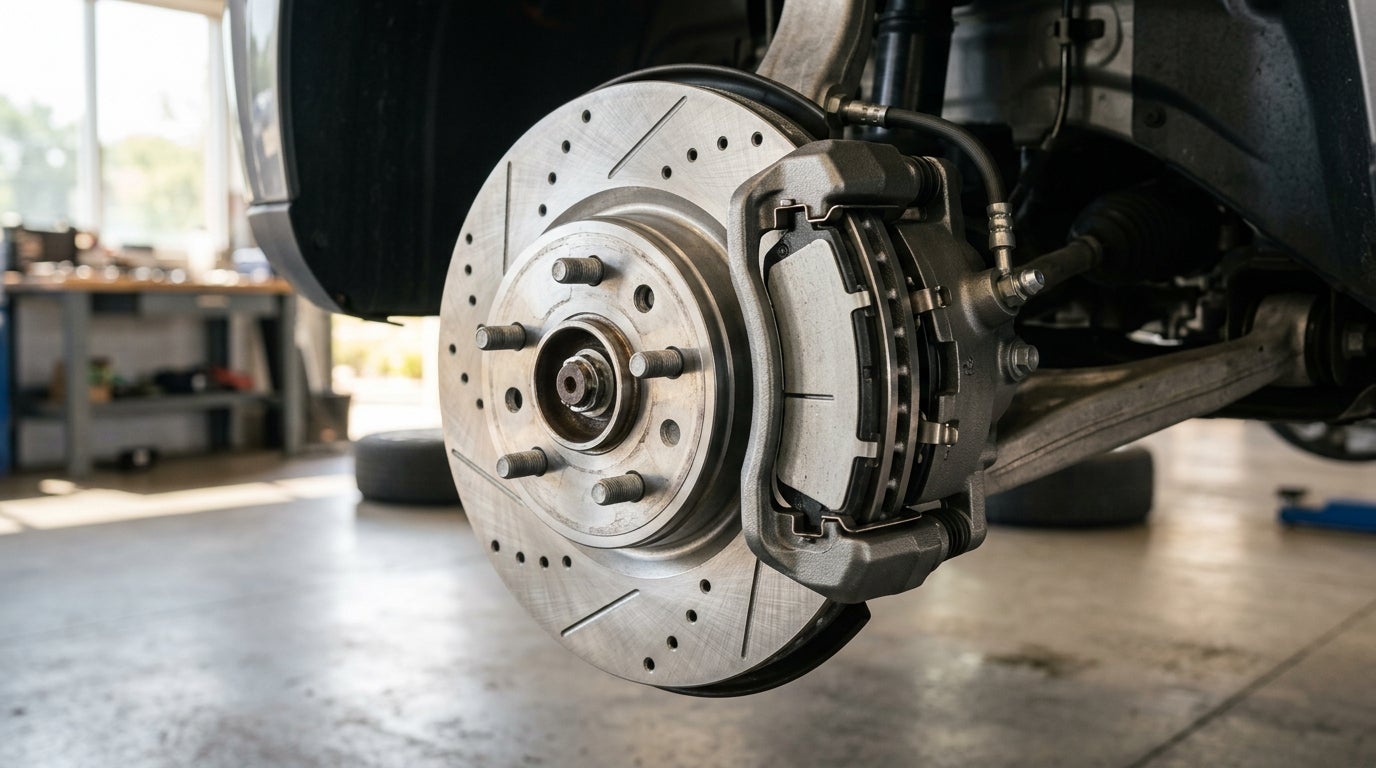
Standard Chevrolet brake service includes a multi-point mechanical inspection of pads, rotors, calipers, and hydraulic lines, accompanied by pad replacement, rotor resurfacing or replacement, caliper hardware lubrication, and fluid testing or flushing. Certified technicians measure friction pad thickness in millimeters, verify rotor minimum discard thickness, check for electronic fault codes, and test brake fluid moisture levels. During a comprehensive service appointment, technicians elevate the vehicle to perform a thorough tear-down inspection of the entire friction assembly. They inspect front and rear brake pads for uneven wear patterns, which often indicate sticking caliper slide pins or binding mounting brackets. Rotors are examined for deep scoring, heat checking, micro-cracking, and lateral runout. Calipers are inspected for fluid leaks around the piston boot, while flexible rubber brake hoses are checked for cracks, swelling, or weather rot. Component servicing utilizes factory-validated replacement parts, such as GM Genuine Parts and ACDelco Gold ceramic or semi-metallic friction pads. Technicians clean pad slide channels, apply high-temperature grease to contact points, and replace worn hardware clips to prevent pad binding. If the brake rotors meet thickness specifications, they may be resurfaced on a lathe to restore a smooth, parallel surface; otherwise, new original equipment rotors are installed and torqued to factory specifications. To schedule an inspection or component replacement at our service center, visit our Acton service center or give our team a quick call to speak directly with an advisor. Drivers operating in mixed weather around Acton benefit from routine undercarriage rinses and hardware lubrication to prevent winter road salt and liquid brine from causing premature caliper corrosion. Table of Contents What Causes a High-Pitched Squealing Sound When Braking in a Chevy? What Is the Recommended Chevrolet Brake Inspection Interval? What Is the Cost Difference Between Pads-Only and Pads-Plus-Rotors Service? What Specialized Tools and Chevrolet Brake Services Are Offered Near Marlborough, MA? ​ Common Questions About Chevrolet Brake Maintenance and Repairs ​ Schedule Your Chevrolet Brake Service ​ What Causes a High-Pitched Squealing Sound When Braking in a Chevy? A high-pitched squealing sound during braking is primarily caused by built-in metallic wear indicators making direct physical contact with the brake rotor to alert you that the pad material has worn down to approximately 2 millimeters. Glazed pad surfaces from excessive heat, moisture build-up, or missing anti-squeal shims can also trigger squealing before pads are fully depleted. The acoustic wear sensor is a small, hardened steel tab attached to the backing plate of the brake pad. As the friction material wears thin over thousands of miles, this tab reaches the surface of the spinning rotor and produces a high-frequency squeal when you apply the brake pedal. This intentional mechanical warning signal indicates that friction material is approaching critical levels and requires immediate professional attention before metal-to-metal contact destroys the rotor. High-temperature glazing is another common culprit behind high-pitched noises. Severe stopping, heavy mountain driving, or riding the brakes down long hills causes extreme heat that hardens the friction compound surface into a smooth, glass-like finish. This glazed layer vibrates against the rotor surface rather than gripping it smoothly, producing a persistent squeal. Debris such as sand, fine gravel, or surface rust forming overnight in damp New England weather can also create temporary squeak or squeal noises until the pads sweep the rotor clean. Addressing noises early prevents minor friction issues from turning into structural rotor damage. Review our current service special offers to save on routine maintenance, hardware replacements, and complete brake component overhaals. What Is the Recommended Chevrolet Brake Inspection Interval? Chevrolet recommends a professional brake inspection every 7,500 miles or six months as part of routine multi-point maintenance, typically performed alongside oil changes and tire rotations. Heavy-duty trucks, towing vehicles, or vehicles driven frequently in severe urban traffic should undergo dedicated pad and rotor checks every 10,000 to 12,000 miles or at least once a year. Brake pad lifespan varies depending on driving environments, cargo loads, and personal braking habits. Severe use—such as heavy stop-and-go commuting corridors around Bedford or frequent trailering—typically yields a pad lifespan between 20,000 and 25,000 miles. Under light highway driving conditions with minimal sudden stops, high-quality factory brake pads often last between 40,000 and 60,000 miles before reaching replacement thresholds. During routine service visits, our technicians measure pad thickness with a precision gauge and record the remaining millimeter depth on your multi-point report. This trackable metric allows owners to anticipate maintenance needs long before metal backing plates scratch the rotors. Technicians also check hydraulic brake fluid levels and test moisture content, as glycol-based brake fluid absorbs ambient moisture over time and should be completely flushed every 45,000 to 60,000 miles or every 3 years. What Is the Cost Difference Between Pads-Only and Pads-Plus-Rotors Service? Replacing Chevrolet brake pads alone typically costs between $150 and $300 per axle, while replacing both brake pads and rotors generally ranges from $300 to $650 per axle. All formal estimates cover a single axle, meaning servicing both front and rear axles doubles the total price. Service Type Parts Included Estimated Cost Range (Per Axle) Pads-Only Replacement New friction pads, hardware clips, grease $150 – $300 Pads + Rotor Resurfacing New friction pads, machined original rotors $200 – $400 Pads + Rotor Replacement New friction pads, new OEM rotors, hardware $300 – $650 Full Axle + Caliper Replacement Pads, rotors, and new/remanufactured caliper $450 – $1,100 Pads-only service is appropriate when existing rotors measure well above their stamped discard thickness, display no deep heat cracks or rust pitting, and show minimal lateral runout. However, modern vehicle rotors are engineered to be lightweight and thin to improve fuel efficiency, meaning they frequently reach minimum thickness during their first pad lifespan and cannot safely sustain a second set of pads. Vehicle size and hardware complexity also dictate final service pricing. Half-ton trucks like the Silverado 1500 utilize larger, heavier cast-iron rotors and multi-piston calipers that require more robust materials, increasing parts costs by 20% to 40% compared to compact crossovers like the Equinox. Choosing premium GM Genuine Parts over lower-tier economy aftermarket components ensures exact factory fitment, quiet operation, and extended wear life. What Specialized Tools and Chevrolet Brake Services Are Offered Near Marlborough, MA? Chevrolet dealership service centers utilize specialized factory diagnostic tools including the GM MDI 2 diagnostic scanner, automated hydraulic pressure bleeder systems, and precision micro-calipers for digital rotor runout measurement. These advanced tools enable precise electronic brake pedal position sensor calibration, ABS module pressure bleeding, and electronic parking brake service mode retraction. Modern Chevrolet vehicles equipped with electronic brake boost systems require specialized software interfaces during routine service. Using the GM MDI 2 scan tool, certified technicians command internal solenoid valves inside the anti-lock braking system module to cycle open. This allows trapped air bubbles and degraded fluid to be completely purged from internal passages during a fluid flush—a step that standard manual pumping cannot accomplish. Service operations near Marlborough also cover electronic parking brake maintenance. On models featuring rear electric parking brake actuators, technicians engage service mode via diagnostic software to retract the internal caliper pistons safely before replacing friction pads. Attempting to compress these electronic calipers manually without software retraction can strip internal motor gears. Technicians also perform precision rotor lathe turning, caliper piston seal rebuilds, and high-performance DOT 4 fluid flushes tailored for performance trims. ​ Common Questions About Chevrolet Brake Maintenance and Repairs Q: How do I know if my Chevrolet brake fluid needs to be changed? Chevrolet recommends flushing brake fluid every 45,000 to 60,000 miles or three years. Brake fluid absorbs ambient moisture over time, lowering its boiling point and causing fluid contamination. Dark brown or black fluid, a spongy brake pedal feel, or a high moisture reading during a multi-point inspection indicates a flush is necessary. Q: Are brake replacement estimates quoted per axle or for the entire vehicle? Most professional automotive service quotes state brake replacement costs per axle. Front and rear braking systems wear at different rates due to front-wheel weight transfer during stopping, so replacing pads or rotors on one axle without servicing the other is standard practice. Servicing both axles simultaneously doubles the single-axle estimate. Q: What happens if DOT 3 and DOT 4 brake fluids are mixed in a Chevy? While both DOT 3 and DOT 4 hydraulic brake fluids are glycol-based and chemically compatible, mixing them reduces the boiling point of the DOT 4 fluid down toward DOT 3 standards. Performance Chevrolet models engineered specifically for higher operating temperatures require pure DOT 4 to prevent fluid boiling and pedal fade under severe braking conditions. Q: Can I drive my Chevrolet if the brakes are making a grinding sound? Driving with grinding brakes is unsafe and damages key mechanical components. A grinding sound indicates the friction material is completely worn away, causing the metal backing plate to carve grooves into the brake rotor. Continued driving compromises stopping distance and turns a routine pad change into a costly caliper and rotor replacement. Q: Do Chevrolet brake services include a warranty on new parts and labor? Original equipment repairs using GM Genuine Parts or ACDelco Gold components installed at an authorized service center carry manufacturer warranty coverage. Qualifying brake pads and rotors include a 24-month/unlimited-mile limited warranty that protects against manufacturing defects and premature component failure. To arrange an inspection or confirm component availability, access our online service scheduling portal or contact our genuine GM parts order desk. Schedule Your Chevrolet Brake Service Routine brake inspections, timely pad replacements, and periodic fluid flushes protect your stopping power, preserve expensive components, and keep your vehicle operating safely. Contact our certified service department today to address squealing noises, pedal pulsation, or scheduled maintenance before minor wear becomes an expensive repair. Set up your next appointment through our online portal, drop by our Acton dealership facility, or call our team directly at (978) 206-1952 to speak with a service advisor. © 2026 Colonial Chevrolet. All rights reserved.
What Is the 2025 Chevrolet Factory Maintenance Schedule

What Is the 2025 Chevrolet Factory Maintenance Schedule?

The 2025 Chevrolet factory maintenance schedule is structured around 7,500-mile service intervals guided by the vehicle's onboard Oil Life Monitoring System. Primary care begins at 7,500 miles with an engine oil and filter change, four-wheel tire rotation, and multi-point vehicle inspection, with key filter replacements occurring at 22,500 miles and 45,000 miles before extended fluid flushes like Dex-Cool coolant at 150,000 miles. Service Interval Core Maintenance Requirements Every 7,500 Miles Engine oil & filter change, four-wheel tire rotation, multi-point safety check 22,500 Miles Cabin air filter replacement, HVAC airflow path inspection 45,000 Miles Engine air cleaner filter replacement, brake fluid check, severe fluid services 150,000 Miles GM Dex-Cool engine coolant drain & flush, accessory drive belt inspection Modern Chevrolet engineering relies on the Oil Life Monitoring System (OLS) rather than a rigid calendar or mileage number alone to dictate engine maintenance. By analyzing engine revolutions, operating temperatures, idle duration, and driving loads, the algorithm calculates remaining lubrication quality in real time. Under favorable driving conditions, the system allows up to 12 months or 12,000 miles between service alerts, though standard driving patterns across the forested routes of Acton typically trigger the warning near the 7,500-mile mark. Choosing the proper engine oil specification is critical to maintaining factory standards and preserving warranty coverage. Gasoline powertrains call for dexos 1 Full Synthetic oil to protect tight internal tolerances, while diesel engines require 15W-40 CJ-4 diesel-rated oil to resist thermal breakdown and soot accumulation. When owners bring in a vehicle for service at our Acton service facility, technicians perform a full reset of the OLS after replenishing fluids with OEM-certified supplies. Severe operating conditions demand shortened service frequencies. Severe duty includes frequent trailering, extended commercial idling, off-road driving in heavy dust, or repeated short trips in sub-freezing regional winter temperatures. Under these operating stresses, changing engine oil between 3,750 miles and 5,000 miles prevents thermal shear and keeps oil passages clear of sludge. To review individual vehicle requirements or arrange your next visit, give our team a quick call at (978) 206-1952. Table of Contents What Is Included in Chevrolet’s Complimentary First Maintenance Visit? Why Is Following Factory Scheduled Maintenance Essential for Your Chevy? How Do Technical Service Bulletins and OEM Care Impact Service Quality? How Can You Schedule 2025 Chevrolet Factory Maintenance Near Acton? ​ Common Questions About 2025 Chevrolet Factory Maintenance Maintain Peak Performance with Certified Service What Is Included in Chevrolet’s Complimentary First Maintenance Visit? Chevrolet’s complimentary initial maintenance visit covers one full engine oil and filter change, a four-wheel tire rotation, and a comprehensive multi-point vehicle inspection within the first 12 months or 12,000 miles of original vehicle delivery. Included Service Inspection & Action Details Engine Oil & Filter Service Full drain & refill with dexos1 synthetic or 15W-40 CJ-4 diesel Four-Wheel Tire Rotation Axle position swap to balance tread wear and extend tire life Multi-Point Vehicle Inspection Comprehensive brake, battery, fluid, wiper, and underbody review Fluid Level Top-Offs Windshield washer fluid and engine coolant adjusted to spec The complimentary visit ensures your new powertrain settles cleanly into service while establishing baseline maintenance data. During the multi-point inspection, certified service technicians examine brake pad wear, tire tread depth, battery health, wiper blade integrity, steering linkage, and underbody protection. Essential operating fluids, including windshield washer fluid and engine coolant, are inspected and topped off to factory fill marks. Certain powertrains follow slightly adapted coverage parameters. High-performance models receive customized initial service allocations, whereas electric vehicles—which do not utilize internal combustion engines—skip oil changes entirely. For electric models, the initial visit centers on a full four-wheel tire rotation, cabin filtration review, chassis inspection, and high-voltage cooling system check. To view current service savings on subsequent visits, review our current service and parts specials before booking. Why Is Following Factory Scheduled Maintenance Essential for Your Chevy? Following factory scheduled maintenance protects your 3-year/36,000-mile bumper-to-bumper limited warranty and 5-year/60,000-mile powertrain limited warranty while guarding critical mechanical components against accelerated wear. Vehicle Component Preventive Maintenance Action Risk of Delayed Service Engine Bearings & Camshafts Scheduled dexos1 oil changes Oil sludge build-up & thermal wear Automatic Transmission Fluid refresh at 45,000/90,000 mi Clutch slipping & shifting harshness Brake Hydraulic System Fluid flush every 5 years Moisture accumulation & internal rust Tires & Wheel Bearings Rotation every 7,500 miles Irregular tread cupping & vibration Engine oil breaks down chemically over time due to heat, fuel dilution, and combustion byproducts. Neglecting regular oil changes allows sludge to accumulate in oil galleries, starving valvetrain components and turbocharger bearings of necessary lubrication. Similarly, daily highway commutes from Bedford subject automatic transmissions to high thermal cycles. Changing transmission fluid and 4WD transfer case fluid around 45,000 miles under severe conditions or 90,000 miles under normal duty removes suspended metallic particles and restores hydraulic line pressure. Salt-belt winter conditions make routine inspections even more critical. Heavy road salt exposure causes surface oxidation on exposed underbody components, brake lines, and electrical ground straps. Regular multi-point inspections identify torn CV boots, leaking shocks, or corroded brake hardware before minor wear escalates into major mechanical failure, keeping your vehicle dependable year-round. How Do Technical Service Bulletins and OEM Care Impact Service Quality? Technical service bulletins (TSBs) provide factory-trained service technicians with exclusive diagnostic procedures, updated repair steps, and specialized software reflashes issued directly by GM engineers to address specific vehicle operating conditions. Service Attribute Factory Certified Service Independent Repair Facilities Direct TSB & Campaign Access Instant real-time VIN integration Third-party software subscription Replacement Component Quality Genuine GM OEM parts Aftermarket generic components Technician Training & Tools GM factory-certified tools General multi-brand equipment Warranty Protection & Continuity Full GM warranty backing Varies by independent facility When a Chevrolet vehicle enters our service bay, its VIN is checked against active factory databases for technical updates, safety recalls, and control module software revisions. Independent shops frequently rely on third-party aggregators that may lack immediate software calibration updates for transmission control modules or driver-assist sensors. Factory-certified care ensures that electronic components operate on the exact software parameters designated by the manufacturer. Component quality directly affects long-term vehicle durability. Factory maintenance uses genuine GM OEM filters, gaskets, and fluids formulated for exact operating tolerances. Non-spec engine filters or off-grade synthetic fluids can alter internal oil pressure readings and interfere with proper OLS calculations. You can arrange your appointment through our online service scheduling portal or request specific replacement components directly from our genuine GM parts ordering department. How Can You Schedule 2025 Chevrolet Factory Maintenance Near Acton? Scheduling factory maintenance for your 2025 Chevrolet involves checking your Driver Information Center for remaining service life, selecting your required interval items online, and choosing a convenient drop-off time. Step Action Process Description 1 Check Driver Information Center Note remaining oil life percentage and current odometer mileage 2 Select Service Needs Choose required 7,500-mile or milestone filter services 3 Book Appointment Slot Pick a convenient date and time via online portal or phone 4 Service Walk-Around & Review Review vehicle condition and multi-point report with service team The Driver Information Center provides advance notice of maintenance needs by displaying remaining oil life percentage on the instrument cluster. Booking online allows you to select specific services—such as a 7,500-mile oil change, tire rotation, or cabin air filter replacement—and select available transportation options like shuttle service or loaner vehicles. Upon arrival at the service center, a service advisor performs an initial vehicle walk-around, recording tire condition and visible wear points. Technicians complete the scheduled maintenance items, run electronic module diagnostics, and prepare a color-coded multi-point inspection report that outlines current fluid health, brake pad thickness, and battery voltage. Common Questions About 2025 Chevrolet Factory Maintenance Q: Does Chevrolet cover tire rotation under the complimentary maintenance visit? Yes, four-wheel tire rotation is included alongside the engine oil and filter change during the complimentary initial maintenance visit within the first 12 months or 12,000 miles of vehicle delivery. Rotating tires at every 7,500-mile interval ensures balanced tread wear across all four wheels, supporting predictable handling and extending overall tire lifespan. Q: How do electric Chevrolet models differ under factory scheduled maintenance? Electric Chevrolet models do not use internal combustion engines, eliminating traditional engine oil changes, spark plug replacements, and exhaust system maintenance. Scheduled service for electric vehicles focuses on four-wheel tire rotations every 7,500 miles, cabin air filter replacements every 22,500 miles, fluid checks for high-voltage cooling loops, and periodic brake system inspections. Q: When should cabin and engine air filters be replaced? Cabin air filters require replacement every 22,500 miles to maintain interior climate control airflow and remove pollen or dust from incoming cabin air. Engine air cleaner filters are scheduled for replacement at 45,000 miles under normal driving conditions, though vehicles operating regularly in dusty or agricultural environments require earlier inspections. Q: What is the difference between normal and severe driving maintenance intervals? Normal driving schedules apply to vehicles operating under balanced highway and suburban conditions. Severe driving schedules apply to vehicles subjected to heavy trailering, commercial hauling, frequent short winter trips under freezing temperatures, or prolonged idling. Severe duty shortens engine oil, transmission fluid, and transfer case service intervals to protect internal components against excessive heat and friction. Q: When should transmission fluid and transfer case fluid be serviced? Under normal driving parameters, automatic transmission fluid and transfer case fluid checks occur during milestone multi-point inspections, with full fluid exchanges typically recommended between 45,000 miles for severe use and 90,000 miles for standard highway operation. Servicing these fluids removes thermal breakdown debris and preserves hydraulic shifting control. Maintain Peak Performance with Certified Service Adhering to factory scheduled maintenance milestones keeps your Chevrolet operating efficiently, preserves factory warranty protection, and maintains strong resale value over years of ownership. Ownership Goal Maintenance Strategy Warranty Protection Complete services per OLS prompts and retain official records Long-Term Powertrain Reliability Use genuine GM OEM fluids, dexos1 oil, and OEM filter elements Optimal Resale Value Document complete certified service history at factory intervals Protecting your vehicle requires staying aligned with factory maintenance intervals from your initial complimentary visit onward. Bringing your vehicle to 171 Great Rd in Acton ensures every service item is handled by factory-certified technicians using genuine GM OEM parts. Contact our service team at (978) 206-1952 to reserve your next maintenance appointment. © 2026 Colonial Chevrolet. All rights reserved.
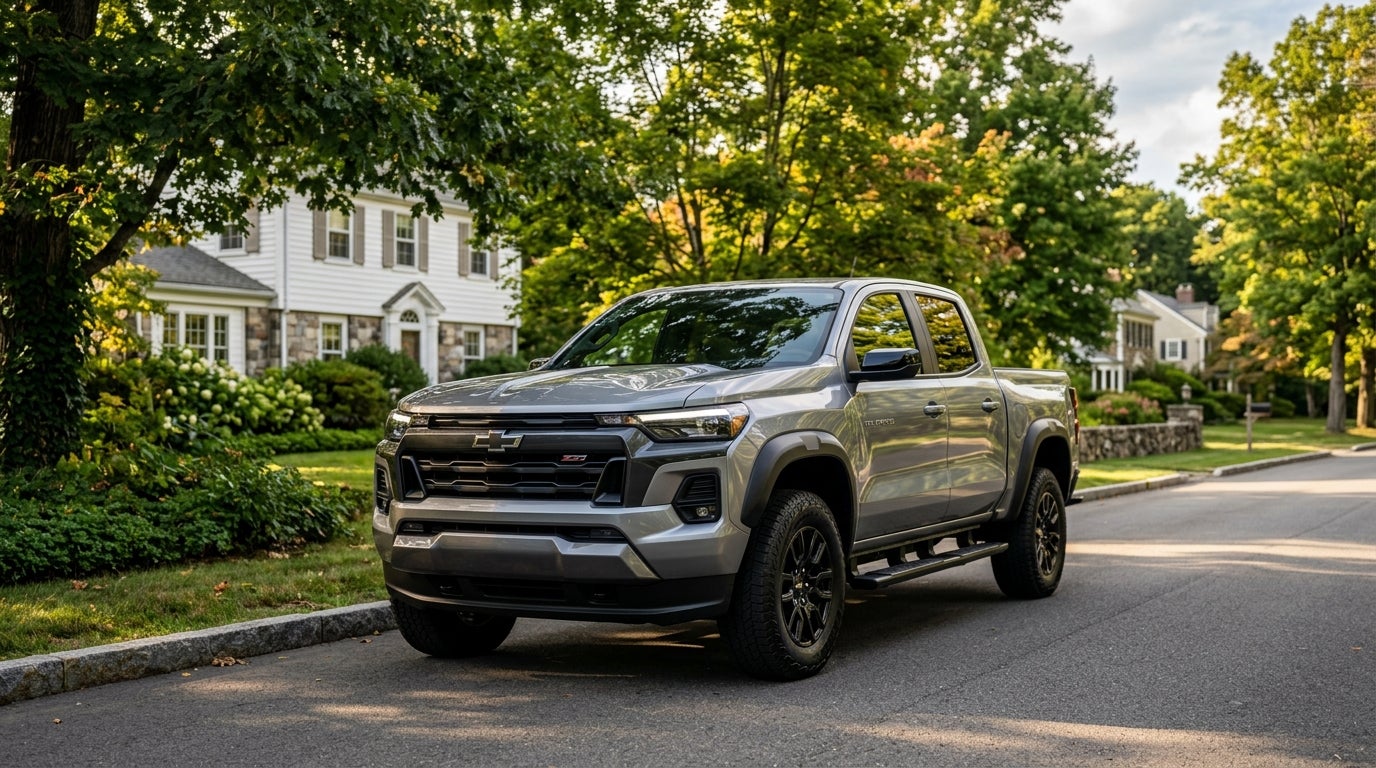
2026 Chevrolet Colorado Trims, Pricing, and Capability Compared

2026 Chevrolet Colorado: Trims, Pricing, and Capability Compared

The 2026 Chevrolet Colorado is the right mid-size pickup for suburban families and professionals who need genuine truck capability without full-size bulk. Starting at $32,400 for the Work Truck 2WD and reaching $50,700 for the ZR2 4WD, the lineup spans seven trims across rear-wheel and four-wheel drive. The turbocharged 2.7L engine delivers 310 hp and 430 lb-ft of torque in every trim, paired with a Hydra-Matic automatic transmission and up to 7,700 lbs of towing on the Trail Boss 4WD and Z71 4WD. Table of Contents How Well Does the 2026 Chevrolet Colorado Serve Families? Rugged Style That Fits Historic Streets: Exterior Design of the 2026 Chevrolet Colorado Power and Control for Bedford's Rolling Terrain: 2026 Chevrolet Colorado Powertrain and Performance Spacious Cabin Comfort for Family Adventures in the 2026 Chevrolet Colorado Tech That Connects You From Suburb to Boston Office: Infotainment Features in the 2026 Chevrolet Colorado Safety Features Designed for School Runs in the 2026 Chevrolet Colorado Mid-Range Value Perfect for Acton and Bedford Families: 2026 Chevrolet Colorado Trim Pricing Breakdown Trusted Colonial Chevrolet Care for Your 2026 Colorado: Warranty, Maintenance, and Service Awards and Expert Recognition Highlighting the 2026 Chevrolet Colorado's Strengths Answers to Your Truck Questions About the 2026 Chevrolet Colorado How Well Does the 2026 Chevrolet Colorado Serve Families? The 2026 Chevrolet Colorado seats five passengers in a Crew Cab body style across every trim in this lineup, making it a practical daily driver for households that also need truck utility on weekends. That combination — family seating plus a short-box bed measuring 61.7 in long and 58.2 in wide — gives parents room for kids, gear, and cargo without the footprint of a full-size truck. Front headroom measures 40.3 in and rear headroom 38.3 in, so taller passengers sit comfortably in both rows. Front legroom is 45.2 in and rear legroom 34.7 in — numbers that translate to genuine back-seat comfort for school-age children and teenagers alike. Front shoulder room reaches 57.4 in and rear shoulder room 56.1 in, so three across the bench seat in back works without crowding. The Crew Cab configuration means four full-size hinged doors, making it easy to load children into car seats or unload bikes and hiking gear at a trailhead. The rear seat folds asymmetrically, opening up under-seat storage when you need it. A standard rear cargo area light, front and rear cup holders, a full floor console, and a partial overhead console add practical day-to-day convenience that families notice on every drive. If you want to see which Colorado trims are currently on the lot at Colonial Chevrolet, browse our current new-vehicle inventory to check availability and compare configurations side by side. Rugged Style That Fits Historic Streets: Exterior Design of the 2026 Chevrolet Colorado At 213.2 in overall length (213 in on Work Truck trims), 74.9 in wide without mirrors, and 84.4 in wide with mirrors, the Colorado occupies a footprint that navigates historic town centers and suburban parking lots without the awkwardness of a full-size truck. Its 78.8 in height on most trims (rising to 79.8 in on the Trail Boss 4WD with its elevated suspension) gives it a commanding road presence without exceeding most residential garage clearances. The exterior carries a Crew Cab roofline described as standard, paired with a short wheelbase of 131.4 in that keeps the truck maneuverable. Front and rear bumpers are painted to match the body on LT and Work Truck trims, giving the truck a clean, finished look suited to both job sites and school pickup lines. Day-time running lights are standard across the lineup, and the LT Convenience Package upgrades the headlights to full LED projector beams with LED fog lights and LED rear lights — a meaningful visibility upgrade for early-morning commutes in the dark months of a Massachusetts winter. All-season tires are standard on LT and Work Truck trims (mounted on 17 in alloy wheels on the LT), while the Trail Boss 4WD rides on 18 in alloys with all-terrain tires that change the truck's character noticeably. Color choices include Snowdrift Metallic and Radiant Red Tintcoat among the available options, giving buyers a range from understated to bold. Shoppers considering a pre-owned Colorado can also explore our pre-owned truck inventory at Colonial Chevrolet for additional options across model years. Power and Control for Bedford's Rolling Terrain: 2026 Chevrolet Colorado Powertrain and Performance Every 2026 Colorado in this lineup shares one powertrain: a turbocharged 2.7L inline four-cylinder producing 310 hp at 5,600 rpm and 430 lb-ft of torque at 3,000 rpm, routed through a Hydra-Matic 8-speed automatic transmission. That torque figure — available relatively low in the rev range — is what makes this engine feel strong on the gently rolling terrain around Bedford's conservation lands and Acton's wooded neighborhoods, where grades are modest but the need for confident passing power is real. The key variable across trims is drivetrain. The LT 2WD and Work Truck 2WD use rear-wheel drive; every other trim — LT 4WD, Trail Boss 4WD, Work Truck 4WD, Z71 4WD, and ZR2 4WD — adds four-wheel drive with a manually selectable transfer case and low/high gear ranges. The Trail Boss 4WD and Work Truck 4WD also add the G80 locking rear differential as standard, which provides additional traction on loose surfaces. The table below shows how drivetrain, curb weight, towing, and payload vary across trims: Feature LT 2WD LT 4WD Trail Boss 4WD Work Truck 2WD Work Truck 4WD Z71 4WD ZR2 4WD Drivetrain Rear-wheel drive All-wheel drive All-wheel drive Rear-wheel drive All-wheel drive All-wheel drive All-wheel drive Curb weight 4,310 lbs 4,520 lbs 4,640 lbs 4,280 lbs 4,480 lbs 4,640 lbs 4,940 lbs Towing 3,500 lbs 3,500 lbs 7,700 lbs 3,500 lbs 3,500 lbs 7,700 lbs 6,000 lbs Payload 1,739 lbs 1,730 lbs 1,610 lbs 1,769 lbs 1,770 lbs 1,610 lbs 1,310 lbs Seating 5 5 5 5 5 5 5 The fuel economy difference between rear-wheel and four-wheel drive configurations is tangible. The 2WD trims return 19 city / 24 highway / 21 combined mpg, while the standard 4WD trims drop to 17 city / 22 highway / 19 combined. The Trail Boss 4WD, with its heavier suspension and all-terrain tires, comes in at 17 city / 20 highway / 18 combined. For a commuter covering regular miles between Acton and a Boston-area office, that 2 mpg combined difference is worth factoring into the total cost of ownership. The suspension setup is independent wishbone up front with coil springs, and a rigid beam axle with leaf springs at the rear — a proven truck architecture that balances towing stability with daily ride quality. When maintenance time arrives, Colonial Chevrolet stocks genuine Chevrolet parts; you can order parts directly through our parts department. Spacious Cabin Comfort for Family Adventures in the 2026 Chevrolet Colorado Three rows of interior measurements tell the practical story of the Colorado's cabin. Front hip room is 54.7 in and rear hip room 53.1 in — nearly identical, which is unusual in a mid-size truck and means rear passengers aren't squeezed laterally. That consistency across front and rear rows makes the Colorado genuinely usable for five adults, not just four with a cramped middle. The driver's seat on the LT trims comes with a 5-way power adjustment including electric height, reach, recline, lumbar, and tilt — a level of adjustability that helps drivers of different heights find a comfortable position for both short school-run errands and longer commutes. The passenger seat adjusts manually on LT trims. The Work Truck base configuration uses manual adjustments for the driver as well, though the WT Convenience II package upgrades it to the full 5-way power setup. Upholstery options vary meaningfully by trim. Work Truck and Trail Boss base configurations use Jet Black Cloth, while the LT Convenience Package on LT trims upgrades to Jet Black Evotex synthetic leather and adds a heated steering wheel, rear seat center armrest, and front seat back storage — small touches that add up on a drive to the Assabet River National Wildlife Refuge with a full family load. The two-zone automatic climate control standard on LT trims lets the driver and front passenger set independent temperatures, which parents of young children will appreciate on unpredictable New England mornings. The Trail Boss 4WD features a StowFlex Tailgate, which adds versatility when loading bikes or gear at a trailhead. Keeping your Colorado maintained properly preserves that interior comfort long-term. Colonial Chevrolet's current service and parts specials can help reduce the cost of scheduled maintenance visits. ​ Tech That Connects You From Suburb to Boston Office: Infotainment Features in the 2026 Chevrolet Colorado Every 2026 Colorado in our Marlborough lineup ships with an 11.3 in touchscreen infotainment display and an 11 in digital instrument cluster — both standard across all seven trims. The infotainment screen supports touch control, and both wireless Apple CarPlay and wireless Android Auto are included as standard features, meaning you connect your phone without a cable every time you get in the truck. That wireless integration matters on a daily commute when plugging in a cable is one more friction point you don't need. The system runs on an embedded SIM card with an OEM data plan and supports over-the-air OS updates, so the truck's software can improve without a dealer visit. OnStar connectivity is standard, providing remote services including remote lock/unlock, vehicle start, find-my-car, theft alert, and vehicle diagnostics — all accessible through the myChevrolet app. The base OnStar subscription runs 96 months for remote services, which is a meaningful included benefit. Google built-in apps and voice assistant functionality are standard, giving hands-free access to navigation, music, and communication without requiring a smartphone connection. The standard audio setup includes 6 speakers with AM/FM, internet radio, and satellite radio (3-month trial included). Steering-wheel-mounted audio controls are standard on all trims. Rear USB charging ports (2 ports) are included in the LT Convenience Package, which also adds HD Surround Vision — a 360-degree camera system that stitches together feeds from multiple cameras to give a bird's-eye view of the truck's surroundings. That feature is genuinely useful when maneuvering in tight parking areas or backing toward a trailer hitch. The optional OnStar One 3 Years upgrade extends connectivity with 36 months of Wi-Fi hotspot access and enhanced navigation services. ​ Safety Features Designed for School Runs in the 2026 Chevrolet Colorado A misconception worth correcting: safety technology on the 2026 Colorado is not reserved for upper trims. Automatic Emergency Braking (AEB) with Pedestrian Detection, Lane Keeping Assist (LKA), Blind Zone Steering Assist, and Rear Cross Traffic Braking are all standard equipment across the entire lineup, including the base Work Truck 2WD. The AEB system activates at speeds as low as 5 mph, which means it is monitoring for hazards in parking lots, school drop-off zones, and slow-moving traffic — exactly the environments where a distracted moment is most likely. Blind Zone Steering Assist goes beyond a simple alert; it applies a steering correction to help keep the truck in its lane when a vehicle is detected in the blind spot, which is a meaningful upgrade over a warning light alone. Rear Cross Traffic Braking uses radar to detect vehicles approaching from the side when reversing and applies the brakes if needed. The passive safety structure includes 6 airbags: dual front airbags, front side airbags, and side curtain airbags spanning front and rear. All seat positions include pre-tensioner seatbelts, and the rear center position gets a 3-point belt. Four-wheel ventilated disc brakes with ABS, brake assist, and hill holder are standard. The truck also includes an accident data recorder and an emergency call function through OnStar. NHTSA crash test results in the catalog show a 4-star overall rating, a 4-star frontal crash rating, a 5-star side impact rating, and a 3-star rollover rating. IIHS results show a Good rating on the small overlap front driver test and a Marginal rating on the moderate overlap front test. Electronic stability control, roll stability control, and electronic traction control round out the active safety suite across all trims. Mid-Range Value Perfect for Acton and Bedford Families: 2026 Chevrolet Colorado Trim Pricing Breakdown The seven-trim Colorado lineup covers a wide price range, and the right entry point depends on how you plan to use the truck. Here is the full pricing picture: Feature LT 2WD LT 4WD Trail Boss 4WD Work Truck 2WD Work Truck 4WD Z71 4WD ZR2 4WD Base MSRP $36,000 $39,300 $40,500 $32,400 $35,700 $44,600 $50,700 Destination charge $2,095 $2,095 $2,095 $2,095 $2,095 $2,095 $2,095 The Work Truck 2WD at $32,400 is the practical entry point for buyers who need truck capability — a 310 hp engine, 1,769 lbs of payload, and a full suite of standard safety technology — without paying for features they won't use. Add the WT Convenience II package and you gain power driver seat adjustment, a leather-wrapped steering wheel, and the StowFlex Tailgate. The LT 2WD at $36,000 adds meaningful comfort upgrades over the Work Truck: a leather-wrapped steering wheel, 5-way power driver seat, two-zone automatic climate control, 17 in alloy wheels, and the full infotainment suite. The optional LT Convenience Package layers on heated front seats, heated steering wheel, HD Surround Vision, and Adaptive Cruise Control — a strong value add for families who will spend real time in this truck. Stepping to the LT 4WD at $39,300 or Work Truck 4WD at $35,700 adds four-wheel drive for those who regularly encounter wet or unpaved surfaces. The Trail Boss 4WD at $40,500 is the dedicated off-road mid-tier, bringing standard all-terrain tires, a locking rear differential, 7,700 lbs of towing, and a raised suspension with a 9.5 in ground clearance. The Z71 4WD at $44,600 adds a more refined off-road and towing package, while the ZR2 4WD at $50,700 is the full-capability, performance-focused top of the range. If you have a vehicle to trade toward a Colorado purchase, Colonial Chevrolet can help you get an estimate on your trade-in's value before you visit the showroom. Trusted Colonial Chevrolet Care for Your 2026 Colorado: Warranty, Maintenance, and Service Every 2026 Chevy Colorado trim comes with a structured warranty package that gives buyers genuine long-term protection. The bumper-to-bumper coverage runs 3 years / 36,000 miles, the powertrain warranty extends to 5 years / 60,000 miles, and corrosion protection covers 6 years / 100,000 miles. Roadside assistance is included for 5 years / 60,000 miles, which means Chevrolet roadside assistance is available throughout most of the truck's early ownership period. Scheduled maintenance coverage runs 2 years / 24,000 miles. The Mobile Service Plus option — available in 1-year or 3-year terms — extends mobile service access for owners who prefer on-site assistance. The optional Engine Block Heater is worth noting for Massachusetts buyers: New England winters can be hard on cold starts, and a block heater reduces wear on the engine during sub-freezing mornings. Colonial Chevrolet's service department at 171 Great Rd, Acton, MA 01720 is staffed with Chevrolet-trained technicians who know this platform. Keeping your Colorado on its scheduled maintenance intervals protects both the powertrain warranty and the long-term reliability of the truck. You can book your service appointment online at any time, which is convenient for busy households managing school schedules and work commitments. Awards and Expert Recognition Highlighting the 2026 Chevrolet Colorado's Strengths The 2026 Chevy Colorado carries forward a platform that has earned consistent recognition from the automotive press. Car and Driver included the Colorado in its 2026 Editors' Choice list — an annual recognition given to vehicles that represent the best value and capability in their segment. That designation reflects the Colorado's competitive position as a mid-size truck that delivers a turbocharged engine, a full suite of standard safety technology, and a broad trim ladder at prices that remain accessible to the family buyers who make up the bulk of this segment. Edmunds has noted the Colorado's strong powertrain as a standout in the mid-size truck class, highlighting the torque output of the 2.7L engine as class-relevant for towing and hauling tasks. MotorTrend has recognized the Colorado's interior technology integration — particularly the standard large touchscreen and wireless smartphone connectivity — as above average for the segment. The Colorado competes directly against the Toyota Tacoma, Ford Ranger, and Nissan Frontier. Against that field, the Colorado's combination of standard AEB with pedestrian detection across all trims, wireless CarPlay and Android Auto, and a single powerful engine option without a base four-cylinder penalty gives it a strong value argument at each price point. Fuel Economy Fuel economy and range by trim Feature LT 2WD LT 4WD Trail Boss 4WD Work Truck 2WD Work Truck 4WD Z71 4WD ZR2 4WD MPG 19 city / 24 hwy / 21 combined 17 city / 22 hwy / 19 combined 17 city / 20 hwy / 18 combined 19 city / 24 hwy / 21 combined 17 city / 22 hwy / 19 combined 17 city / 20 hwy / 18 combined 17 city / 17 hwy / 17 combined Answers to Your Truck Questions About the 2026 Chevrolet Colorado Q: What is the maximum towing capacity of the 2026 Chevrolet Colorado? The maximum towing capacity depends on the trim. The Trail Boss 4WD and Z71 4WD both tow up to 7,700 lbs when equipped with the Advanced Trailering Package, which adds trailer hitch assist, a trailer reversing aid, trailer brake control, and a mechanical limited-slip rear differential. The ZR2 4WD is rated at 6,000 lbs. The LT 2WD, LT 4WD, Work Truck 2WD, and Work Truck 4WD are rated at 3,500 lbs in standard configuration, though the Advanced Trailering Package is available on those trims to increase towing capacity to 7,700 lbs as well. Q: Does the 2026 Colorado come with four-wheel drive on all trims? No. The LT 2WD and Work Truck 2WD are rear-wheel drive. The LT 4WD, Trail Boss 4WD, Work Truck 4WD, Z71 4WD, and ZR2 4WD all include four-wheel drive with a manually selectable transfer case and low/high gear ranges. If you regularly drive on unpaved roads, gravel paths, or encounter significant snow, the 4WD models offer meaningfully better traction. Q: What fuel economy does the 2026 Chevrolet Colorado get? The LT 2WD and Work Truck 2WD deliver 19 city / 24 highway / 21 combined mpg. The LT 4WD and Work Truck 4WD return 17 city / 22 highway / 19 combined. The Trail Boss 4WD comes in at 17 city / 20 highway / 18 combined due to its all-terrain tires and heavier suspension. All trims use regular unleaded fuel (87 octane) with a about 21.5 gallon tank. Q: Is the 2026 Colorado a good fit for daily suburban driving? At 213.2 in long and 74.9 in wide (body only), the Colorado is manageable in suburban parking lots and residential driveways. Its Crew Cab body gives all five passengers real space, and the standard wireless CarPlay and Android Auto keep the driver connected without fumbling with cables. For families balancing school runs, weekend outdoor trips, and the occasional hauling task, it fits that use case well. Q: Where can I see a 2026 Colorado in person? Colonial Chevrolet is located at 171 Great Rd, Acton, MA 01720. You can also reach the sales team directly at (978) 206-1952 to confirm inventory, ask about specific trim availability, or schedule a test drive before making the trip. © 2026 Colonial Chevrolet. All rights reserved.