





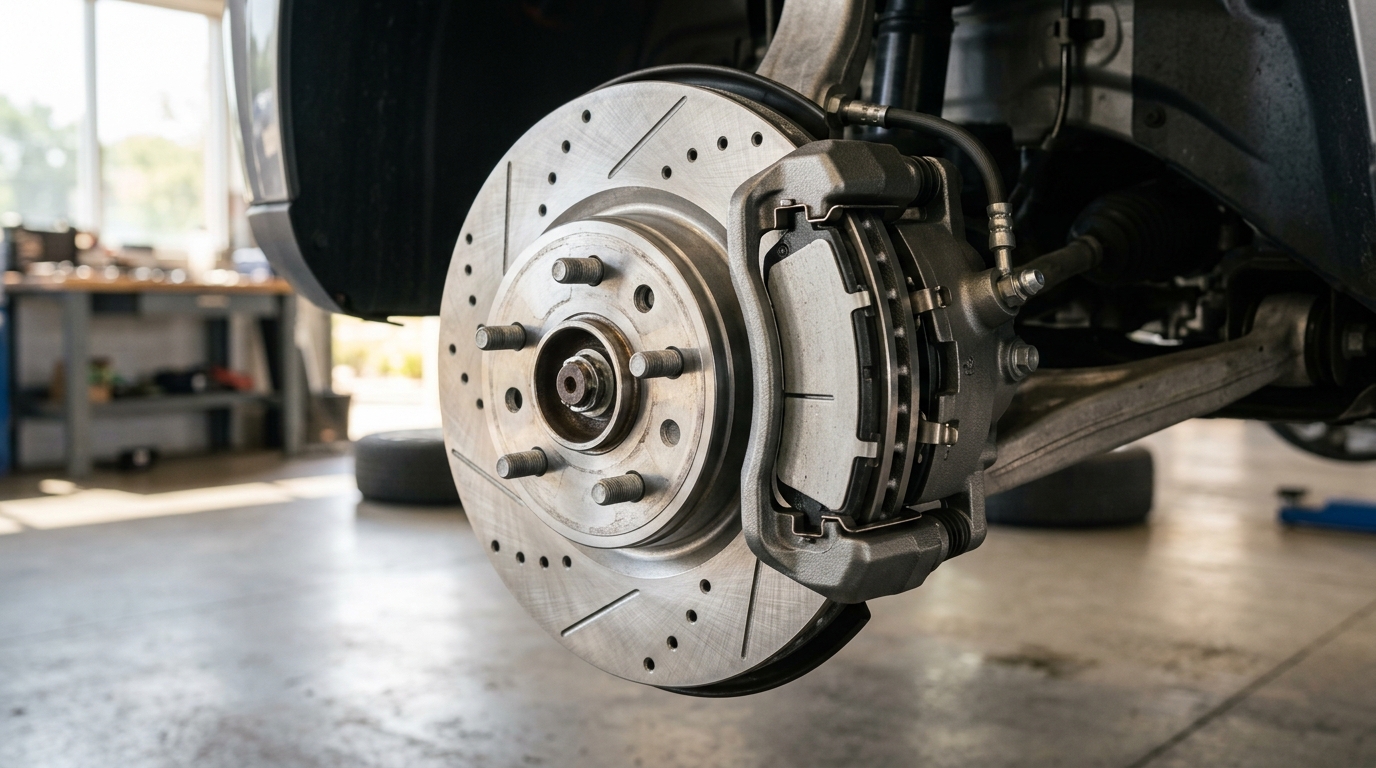
Standard Chevrolet brake service includes a multi-point mechanical inspection of pads, rotors, calipers, and hydraulic lines, accompanied by pad replacement, rotor resurfacing or replacement, caliper hardware lubrication, and fluid testing or flushing. Certified technicians measure friction pad thickness in millimeters, verify rotor minimum discard thickness, check for electronic fault codes, and test brake fluid moisture levels.
During a comprehensive service appointment, technicians elevate the vehicle to perform a thorough tear-down inspection of the entire friction assembly. They inspect front and rear brake pads for uneven wear patterns, which often indicate sticking caliper slide pins or binding mounting brackets. Rotors are examined for deep scoring, heat checking, micro-cracking, and lateral runout. Calipers are inspected for fluid leaks around the piston boot, while flexible rubber brake hoses are checked for cracks, swelling, or weather rot.
Component servicing utilizes factory-validated replacement parts, such as GM Genuine Parts and ACDelco Gold ceramic or semi-metallic friction pads. Technicians clean pad slide channels, apply high-temperature grease to contact points, and replace worn hardware clips to prevent pad binding. If the brake rotors meet thickness specifications, they may be resurfaced on a lathe to restore a smooth, parallel surface; otherwise, new original equipment rotors are installed and torqued to factory specifications.
To schedule an inspection or component replacement at our service center, visit our Acton service center or give our team a quick call to speak directly with an advisor. Drivers operating in mixed weather around Acton benefit from routine undercarriage rinses and hardware lubrication to prevent winter road salt and liquid brine from causing premature caliper corrosion.
Table of Contents
- What Causes a High-Pitched Squealing Sound When Braking in a Chevy?
- What Is the Recommended Chevrolet Brake Inspection Interval?
- What Is the Cost Difference Between Pads-Only and Pads-Plus-Rotors Service?
- What Specialized Tools and Chevrolet Brake Services Are Offered Near Marlborough, MA?
- Common Questions About Chevrolet Brake Maintenance and Repairs
- Schedule Your Chevrolet Brake Service
What Causes a High-Pitched Squealing Sound When Braking in a Chevy?
A high-pitched squealing sound during braking is primarily caused by built-in metallic wear indicators making direct physical contact with the brake rotor to alert you that the pad material has worn down to approximately 2 millimeters. Glazed pad surfaces from excessive heat, moisture build-up, or missing anti-squeal shims can also trigger squealing before pads are fully depleted.
The acoustic wear sensor is a small, hardened steel tab attached to the backing plate of the brake pad. As the friction material wears thin over thousands of miles, this tab reaches the surface of the spinning rotor and produces a high-frequency squeal when you apply the brake pedal. This intentional mechanical warning signal indicates that friction material is approaching critical levels and requires immediate professional attention before metal-to-metal contact destroys the rotor.
High-temperature glazing is another common culprit behind high-pitched noises. Severe stopping, heavy mountain driving, or riding the brakes down long hills causes extreme heat that hardens the friction compound surface into a smooth, glass-like finish. This glazed layer vibrates against the rotor surface rather than gripping it smoothly, producing a persistent squeal. Debris such as sand, fine gravel, or surface rust forming overnight in damp New England weather can also create temporary squeak or squeal noises until the pads sweep the rotor clean.
Addressing noises early prevents minor friction issues from turning into structural rotor damage. Review our current service special offers to save on routine maintenance, hardware replacements, and complete brake component overhaals.
What Is the Recommended Chevrolet Brake Inspection Interval?
Chevrolet recommends a professional brake inspection every 7,500 miles or six months as part of routine multi-point maintenance, typically performed alongside oil changes and tire rotations. Heavy-duty trucks, towing vehicles, or vehicles driven frequently in severe urban traffic should undergo dedicated pad and rotor checks every 10,000 to 12,000 miles or at least once a year.
Brake pad lifespan varies depending on driving environments, cargo loads, and personal braking habits. Severe use—such as heavy stop-and-go commuting corridors around Bedford or frequent trailering—typically yields a pad lifespan between 20,000 and 25,000 miles. Under light highway driving conditions with minimal sudden stops, high-quality factory brake pads often last between 40,000 and 60,000 miles before reaching replacement thresholds.
During routine service visits, our technicians measure pad thickness with a precision gauge and record the remaining millimeter depth on your multi-point report. This trackable metric allows owners to anticipate maintenance needs long before metal backing plates scratch the rotors. Technicians also check hydraulic brake fluid levels and test moisture content, as glycol-based brake fluid absorbs ambient moisture over time and should be completely flushed every 45,000 to 60,000 miles or every 3 years.
What Is the Cost Difference Between Pads-Only and Pads-Plus-Rotors Service?
Replacing Chevrolet brake pads alone typically costs between $150 and $300 per axle, while replacing both brake pads and rotors generally ranges from $300 to $650 per axle. All formal estimates cover a single axle, meaning servicing both front and rear axles doubles the total price.
| Service Type | Parts Included | Estimated Cost Range (Per Axle) |
|---|---|---|
| Pads-Only Replacement | New friction pads, hardware clips, grease | $150 – $300 |
| Pads + Rotor Resurfacing | New friction pads, machined original rotors | $200 – $400 |
| Pads + Rotor Replacement | New friction pads, new OEM rotors, hardware | $300 – $650 |
| Full Axle + Caliper Replacement | Pads, rotors, and new/remanufactured caliper | $450 – $1,100 |
Pads-only service is appropriate when existing rotors measure well above their stamped discard thickness, display no deep heat cracks or rust pitting, and show minimal lateral runout. However, modern vehicle rotors are engineered to be lightweight and thin to improve fuel efficiency, meaning they frequently reach minimum thickness during their first pad lifespan and cannot safely sustain a second set of pads.
Vehicle size and hardware complexity also dictate final service pricing. Half-ton trucks like the Silverado 1500 utilize larger, heavier cast-iron rotors and multi-piston calipers that require more robust materials, increasing parts costs by 20% to 40% compared to compact crossovers like the Equinox. Choosing premium GM Genuine Parts over lower-tier economy aftermarket components ensures exact factory fitment, quiet operation, and extended wear life.
What Specialized Tools and Chevrolet Brake Services Are Offered Near Marlborough, MA?
Chevrolet dealership service centers utilize specialized factory diagnostic tools including the GM MDI 2 diagnostic scanner, automated hydraulic pressure bleeder systems, and precision micro-calipers for digital rotor runout measurement. These advanced tools enable precise electronic brake pedal position sensor calibration, ABS module pressure bleeding, and electronic parking brake service mode retraction.
Modern Chevrolet vehicles equipped with electronic brake boost systems require specialized software interfaces during routine service. Using the GM MDI 2 scan tool, certified technicians command internal solenoid valves inside the anti-lock braking system module to cycle open. This allows trapped air bubbles and degraded fluid to be completely purged from internal passages during a fluid flush—a step that standard manual pumping cannot accomplish.
Service operations near Marlborough also cover electronic parking brake maintenance. On models featuring rear electric parking brake actuators, technicians engage service mode via diagnostic software to retract the internal caliper pistons safely before replacing friction pads. Attempting to compress these electronic calipers manually without software retraction can strip internal motor gears. Technicians also perform precision rotor lathe turning, caliper piston seal rebuilds, and high-performance DOT 4 fluid flushes tailored for performance trims.
Common Questions About Chevrolet Brake Maintenance and Repairs
Q: How do I know if my Chevrolet brake fluid needs to be changed?
Chevrolet recommends flushing brake fluid every 45,000 to 60,000 miles or three years. Brake fluid absorbs ambient moisture over time, lowering its boiling point and causing fluid contamination. Dark brown or black fluid, a spongy brake pedal feel, or a high moisture reading during a multi-point inspection indicates a flush is necessary.
Q: Are brake replacement estimates quoted per axle or for the entire vehicle?
Most professional automotive service quotes state brake replacement costs per axle. Front and rear braking systems wear at different rates due to front-wheel weight transfer during stopping, so replacing pads or rotors on one axle without servicing the other is standard practice. Servicing both axles simultaneously doubles the single-axle estimate.
Q: What happens if DOT 3 and DOT 4 brake fluids are mixed in a Chevy?
While both DOT 3 and DOT 4 hydraulic brake fluids are glycol-based and chemically compatible, mixing them reduces the boiling point of the DOT 4 fluid down toward DOT 3 standards. Performance Chevrolet models engineered specifically for higher operating temperatures require pure DOT 4 to prevent fluid boiling and pedal fade under severe braking conditions.
Q: Can I drive my Chevrolet if the brakes are making a grinding sound?
Driving with grinding brakes is unsafe and damages key mechanical components. A grinding sound indicates the friction material is completely worn away, causing the metal backing plate to carve grooves into the brake rotor. Continued driving compromises stopping distance and turns a routine pad change into a costly caliper and rotor replacement.
Q: Do Chevrolet brake services include a warranty on new parts and labor?
Original equipment repairs using GM Genuine Parts or ACDelco Gold components installed at an authorized service center carry manufacturer warranty coverage. Qualifying brake pads and rotors include a 24-month/unlimited-mile limited warranty that protects against manufacturing defects and premature component failure.
To arrange an inspection or confirm component availability, access our online service scheduling portal or contact our genuine GM parts order desk.
Schedule Your Chevrolet Brake Service
Routine brake inspections, timely pad replacements, and periodic fluid flushes protect your stopping power, preserve expensive components, and keep your vehicle operating safely. Contact our certified service department today to address squealing noises, pedal pulsation, or scheduled maintenance before minor wear becomes an expensive repair.
Set up your next appointment through our online portal, drop by our Acton dealership facility, or call our team directly at (978) 206-1952 to speak with a service advisor.
© 2026 Colonial Chevrolet. All rights reserved.
Connect with us


