



Restoring Safety and Performance After a Collision
Modern vehicle architecture requires a specialized approach to repair that goes far beyond traditional bodywork. For a 2026 Chevrolet, a collision involves more than just visible dents; it affects integrated safety sensors, high-strength steel frames, and sophisticated electronic modules. Our team focuses on returning every vehicle to its original factory specifications to ensure that crumple zones and safety systems perform exactly as intended in the future.
When an incident occurs on the road, the initial steps you take can significantly impact the quality of the eventual restoration. For minor incidents that do not trigger an automatic response, owners can now utilize the Collision Assistance app to document damage and begin the digital workflow for a repair. Whether you are navigating the suburban routes in Acton or dealing with a fender-bender near a local shopping center, having a clear plan for professional recovery is essential for long-term vehicle health.
The restoration process at our facility is designed to be comprehensive, addressing both the cosmetic finish and the underlying structural integrity. If you find yourself needing professional advice after an accident, you can reach our service professionals at (978) 206-1952 to discuss the next steps. For those who need to coordinate a tow or drop off a vehicle, our Acton location provides a centralized hub for expert collision support.
Table of Contents
- The Advantages of Choosing GM Certified Repair Standards
- Industry Certifications for Modern Chevrolet Structural Repairs
- Understanding the High Cost and Complexity of Front-End Impact Care
- Managing Insurance Claims and the Value of Genuine Parts
- What to Expect During the Late-Model Vehicle Restoration Process
- Common Questions About Chevrolet Collision and Body Repairs
- Schedule Your Professional Restoration at Colonial Chevrolet
The Advantages of Choosing GM Certified Repair Standards
Choosing a facility that adheres to GM Certified standards ensures that your 2026 Chevrolet receives care tailored to its specific engineering. These centers are required to use specialized tools and equipment that meet manufacturer requirements for the latest model years. This level of precision is vital for maintaining the bumper-to-bumper warranty and ensuring that replacement components fit perfectly.
One of the primary benefits of this certification is the prioritized use of Genuine GM Parts. Unlike aftermarket alternatives, these parts are manufactured to the exact dimensions and material grades used on the assembly line. This is particularly important for structural components and exterior panels that must align with factory-installed sensors. To ensure your vehicle remains in peak condition, our team makes it easy to request authentic components directly through our specialized department.
Beyond parts quality, a certified approach includes access to the most recent technical service bulletins and repair procedures released by the manufacturer. This technical depth allows us to identify hidden issues that a general shop might overlook. Owners looking to manage their maintenance budget while maintaining these high standards should regularly check our current service and parts specials for relevant offers. When you are ready to begin the repair process, you can schedule a consultation online to have our experts evaluate your vehicle.
Industry Certifications for Modern Chevrolet Structural Repairs
A Chevrolet collision body shop must possess specific industry credentials to properly manage the complexities of a 2026 Chevrolet. The most critical of these is the I-CAR Gold Class designation. This certification indicates that technicians have undergone rigorous, ongoing training in the latest repair technologies, including high-strength steel welding and aluminum repair techniques. As vehicle materials become lighter and stronger, the methods used to join and straighten them must evolve accordingly.
Structural repairs on newer models often involve mixed-material construction. For example, a vehicle might utilize aluminum for the hood and fenders to save weight while relying on ultra-high-strength steel for the passenger cage. Repairing these materials requires specific pulse-welders and rivet-bonding tools that are not found in every shop. Without the correct certification and equipment, a repair might look correct on the surface while lacking the structural strength required to protect occupants in a subsequent impact.
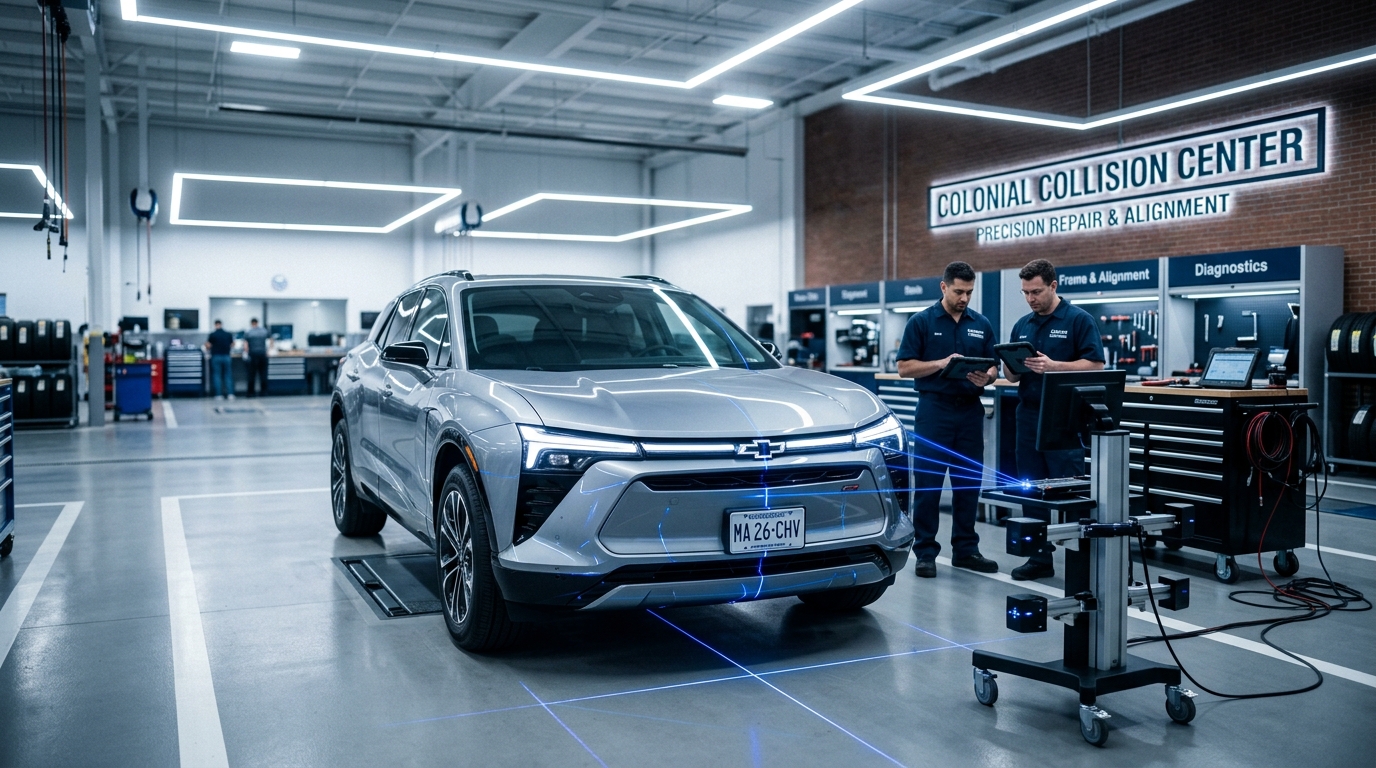
Furthermore, certifications ensure that the shop is equipped for ADAS (Advanced Driver Assistance Systems) recalibration. A 2026 Chevrolet is equipped with a suite of cameras and radar units that assist with braking and lane centering. If a bumper is removed for paint or a frame is pulled even a fraction of an inch, these sensors must be recalibrated using manufacturer-specific software. Industry-certified shops maintain the clean-room environments and digital targets necessary to perform these safety-critical tasks.
Understanding the High Cost and Complexity of Front-End Impact Care
Front-end collisions are frequently the most expensive and technically demanding repairs a body shop handles. This is because the front of a 2026 Chevrolet houses the majority of the vehicle’s “intelligence” and cooling infrastructure. Behind the grille and bumper cover lies a dense network of components, including the radiator, air conditioning condenser, transmission oil coolers, and various air shutters designed for aerodynamics.
In addition to mechanical cooling, the front end contains the primary sensors for the Forward Collision Alert and Automatic Emergency Braking systems. Even a low-speed impact can shatter the plastic mounting brackets for these sensors or crack the expensive LED headlight assemblies. Because these lights are often integrated into the vehicle’s computer network for auto-high beam functionality, they require more than just a simple plug-in installation; they often need to be “handshaked” with the vehicle’s control module via a diagnostic scan tool.
The structural rails at the front are also designed as sacrificial components. They are engineered to fold at specific points to absorb energy. Once these rails have “crushed,” they cannot simply be pulled back into shape; they must often be replaced by cutting out the damaged section and welding in a new factory rail at specific “sectioning” points defined by Chevrolet engineers. This labor-intensive process, combined with the high cost of electronic components, explains why front-end damage estimates can escalate quickly compared to rear-end or side-panel repairs.
Managing Insurance Claims and the Value of Genuine Parts
Navigating an insurance claim for a late-model vehicle requires a clear understanding of your policy’s language regarding parts. Many insurance companies will initially write an estimate based on “Alternative” or “Aftermarket” parts to save costs. However, for a 2026 Chevrolet, using anything other than Genuine GM Parts can lead to complications. While aftermarket parts do not void your entire warranty, any failure or damage caused by an ill-fitting third-party part will not be covered by the manufacturer.
When we work with insurance adjusters, our goal is to advocate for a “pre-accident condition” restoration. This means pushing for parts that match the original fit, finish, and structural integrity of the vehicle. In many cases, the slight cost difference for an OEM fender or bumper is offset by the reduced labor time required to make it fit correctly. Aftermarket panels often require significant “shimming” or modifications to achieve proper gaps, which can lead to wind noise or water leaks over time.
For residents in Stow, where agricultural heritage and open spaces mean a higher likelihood of encountering wildlife on the road, deer-related claims are a frequent occurrence. These incidents often involve a mix of body damage and broken glass. We coordinate directly with your insurance provider to ensure that every aspect of the claim—from the structural inspection to the final paint match—is handled under a single, transparent repair plan.
What to Expect During the Late-Model Vehicle Restoration Process
The process of repairing a 2026 Chevrolet begins with a “Blueprinting” stage rather than a simple visual estimate. During blueprinting, the vehicle is partially disassembled to uncover hidden damage that might be lurking behind the plastic bumper covers or under the battery tray. This ensures that all necessary parts are ordered at once, which helps minimize the time your vehicle spends in the shop. Families in Bedford who rely on their SUVs for daily commutes to nearby tech hubs often appreciate this thoroughness, as it prevents mid-repair delays.
Once the parts arrive and the structural work is complete, the vehicle moves to the refinishing stage. Modern Chevrolet paint finishes, such as tri-coat pearls or metallic clears, require a computerized mixing system to ensure a perfect match. The paint is applied in a downdraft spray booth that bakes the finish to a factory-hardened state. This environment prevents dust and contaminants from ruining the shine, ensuring the new paint is indistinguishable from the original.
The final and perhaps most important step is the post-repair scan and test drive. We reconnect all electronic systems and perform a final diagnostic check to ensure no “trouble codes” remain in the system. This includes verifying that all Lane Keep Assist and parking sensors are active and accurate. Only after the vehicle passes this digital health check and a physical quality inspection is it detailed and returned to the owner.
Common Questions About Chevrolet Collision and Body Repairs
Q: Will my 2026 Chevrolet be the same after a major structural repair?
When repairs are performed at a certified center using factory-approved sectioning techniques and Genuine GM Parts, the vehicle’s structural integrity is restored to its original safety ratings. The frame and crumple zones are designed to be repairable by trained technicians using specific welding and bonding protocols.
Q: How long will the collision repair process take?
The duration depends on the extent of the damage and the availability of specific electronic components. A minor bumper repair might take three to five days, while a major front-end restoration involving structural rails and sensor recalibration can take two to three weeks. We provide regular updates to keep you informed of the timeline.
Q: Do I have to use the body shop my insurance company recommends?
No, you have the legal right to choose any repair facility you trust. While insurers have “preferred” shops, these are often chosen for cost-savings. You are entitled to bring your vehicle to a certified center that prioritizes manufacturer-standard repairs and the use of original equipment.
Q: Is recalibration really necessary for a simple windshield replacement?
Yes, because the forward-facing camera for the Automatic Emergency Braking system is mounted directly behind the rearview mirror. If the glass is replaced, the camera’s “view” changes slightly. Even a millimeter of variance can cause the safety systems to malfunction or fail to activate when needed.
Q: Does the body shop provide a warranty on the paint and labor?
Most certified collision centers offer a limited lifetime warranty on the workmanship and paint for as long as you own the vehicle. This covers issues like paint peeling or fading, ensuring that the repair holds up to the same standards as the rest of the factory finish.
Schedule Your Professional Restoration at Colonial Chevrolet
Restoring a vehicle after an accident is a technical challenge that requires a dedicated team of specialists. At Colonial Chevrolet, we are committed to providing the high-level service and technical expertise required to handle the advanced systems of the 2026 Chevrolet lineup. From the initial damage assessment to the final ADAS recalibration, we manage every detail to ensure your vehicle returns to the road in peak condition.
Our Chevrolet Body Shop facility serves drivers throughout the region, providing a reliable destination for those seeking manufacturer-standard bodywork and structural care. If you are currently dealing with the aftermath of an accident, we encourage you to reach out to our team for a professional evaluation. We can assist with insurance coordination and provide a clear, itemized plan for your vehicle’s recovery.
To speak with a collision specialist or to begin the process of restoring your vehicle, give us a quick call today. If you prefer to visit us in person to discuss your repair needs, you can find our Acton service center located at 171 Great Rd. We look forward to helping you get back on the road with confidence.
© 2026 Colonial Chevrolet. All rights reserved.
Connect with us


